
Inter, Inzaghi, and the Math of Overachievement
A data-driven look at how Simone Inzaghi built something rare

I've been following Inter for over 16 years. Long enough to remember the dizzying heights of the Treble and the wilderness years that followed. But under Simone Inzaghi, something different is happening.
Despite losing a Champions League final (that too by the biggest margin), Inter have picked up trophies, played consistently well across competitions, and held their own against clubs with far deeper pockets. There's a sense of control, of balance, of knowing who we are.
So I decided to put my bias to the test: just how efficient has Inzaghi's Inter really been? Here's what the numbers suggest. (I have mostly focused on the inputs here, i.e. the resources, not how his team plays football)
Before we get into the numbers- The Data Signal is free, curious, and always rooted in data. If that sounds like your thing, hit subscribe.
PSG vs Inter: The Transfer Spending Gap
Inter's last opponent PSG is known for their lavish spending. But how stark is the difference between the two? Let's examine how they line up against each other in terms of spending since Simone Inzaghi joined Inter.
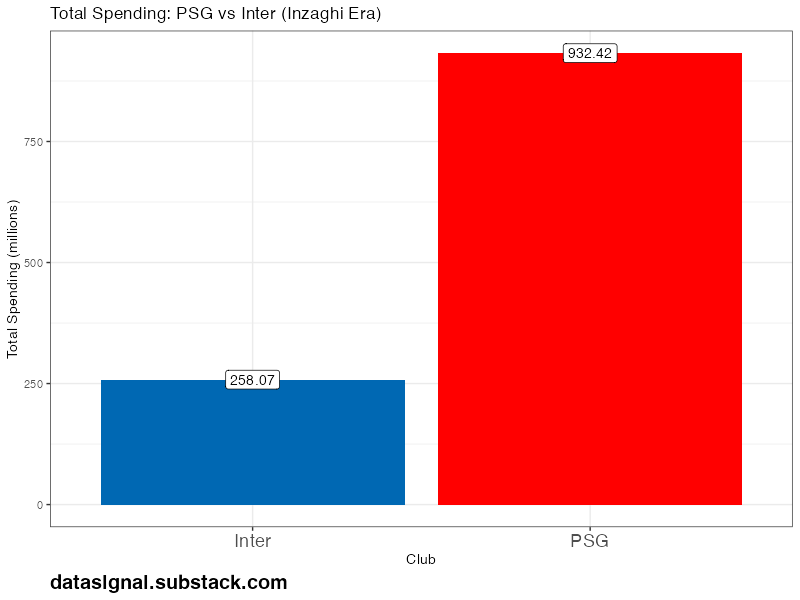
PSG's total spending has been almost 4x what Inter spent. But this doesn't tell the full story. Let's provide more context between the two sides. PSG's spending for 2024-25 alone (not even their highest spending year):
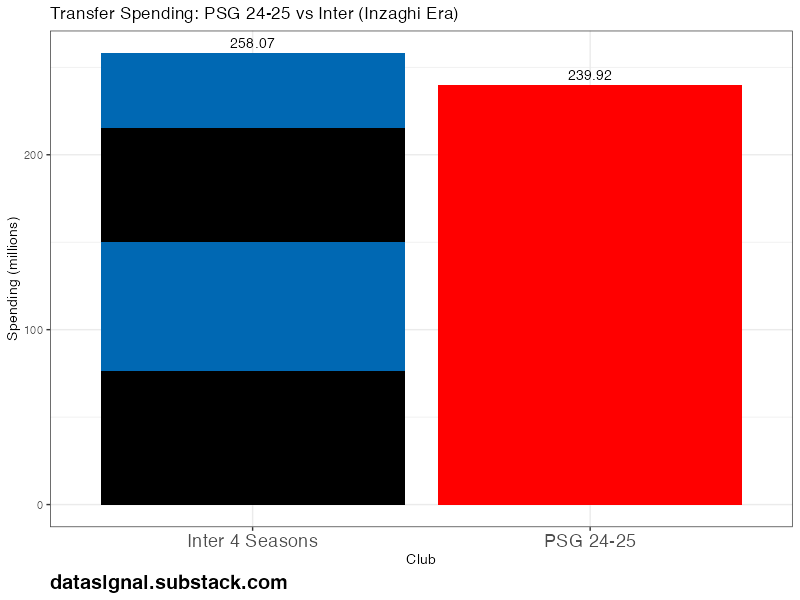
What PSG spent in one season is only €19 million (7.37%) less than what Inter have spent over 4 seasons under Inzaghi.
How Does Inter Compare to Italian Rivals?
This spending trend covers the top Italian clubs that have won at least one trophy in the last 5 years, across the timeframe since Inzaghi arrived.
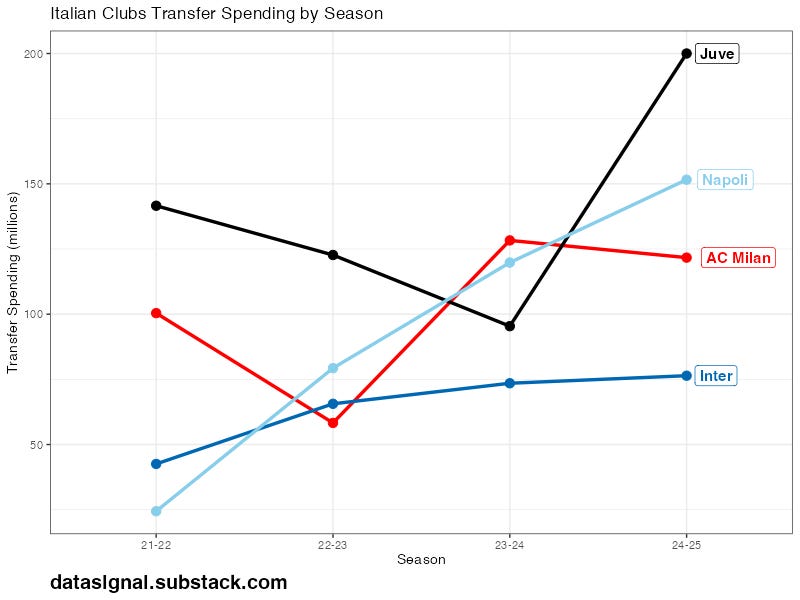
Juventus saw a dramatic surge last year (perhaps backing new manager Thiago Motta?). Napoli have increased their spending over the years, while Milan's spending pattern shows volatility.
The Nerazzurri, on the other hand, have maintained remarkable stability.
The Efficiency Test
One way to measure efficiency is to flip the usual spending tables. Instead of asking "how much did a team spend?", we ask: "how many points did they get for every € million they spent?"
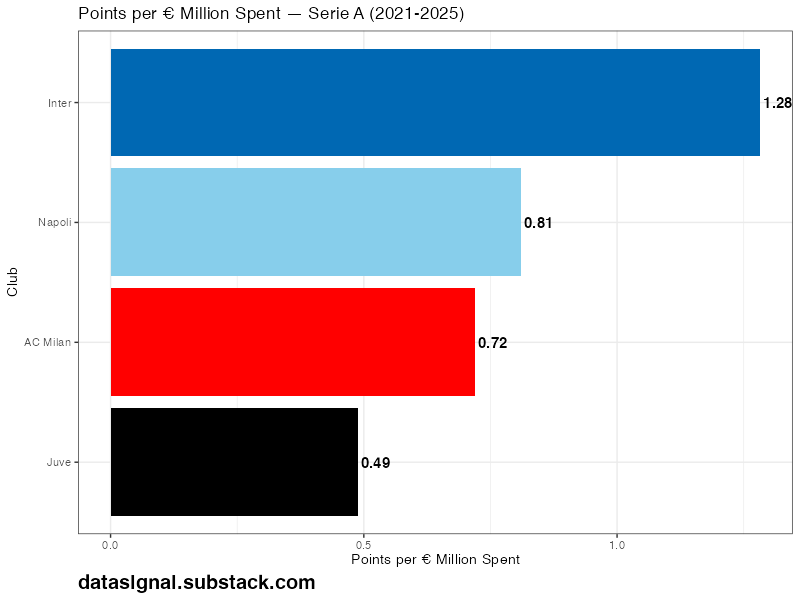
Inzaghi's Inter looks remarkably lean in this framework. Compared to other top Italian sides, the return on investment has been consistently strong:
At 1.28 points per €1M spent, Inter is by far the most efficient club, getting nearly 60% more value than the second-best team. Juventus's €559M investment has yielded the worst value for money.
Much of this boils down to smart scouting and tactical fit. Inzaghi and the Inter directors have done a phenomenal job in this regard.
The Bigger Picture
While transfer spending isn't the only indicator, it's one of the most important factors for a club's sustainable success. Another metric worth examining is wages, where Inter's two rivals from recent UCL finals top the charts, while Juventus and Milan also feature in the top 20.
I haven't even considered net spending, which is itself a controversial metric. If you can sell well, your numbers won't reflect poorly there. But even considering that, Inzaghi's Inter ranks #241 in that list, far behind PSG, Milan, Juventus and Napoli.
The Inzaghi Effect
Inter's primary target after 2020 (COVID-19) has been to stay "competitive." What Mr. Inzaghi has accomplished here is nothing short of remarkable. I don't think anyone could have achieved this before him, and replicating it after him would be yet another challenge.
The numbers don't lie: Inter under Inzaghi represents a masterclass in efficiency, proving that smart management can triumph over unlimited budgets.
The Last Word
In an era where football headlines are filled with absurd transfer fees and jaw-dropping wage bills, Inzaghi’s Inter feels like a breath of fresh air. There’s no wild spending spree, no galáctico obsession - just a clear plan, smart decisions, and a team that knows what it’s about.
The recent 5-0 defeat to PSG was undoubtedly a big setback, a harsh reminder that efficiency has its limits when facing unlimited resources. But even that painful night doesn't diminish what's been built here.
Perhaps that's what makes this version of Inter so special. It's not just about the trophies or the beautiful football, it's about proving that there's still room in modern football for clubs that think before they spend, that build rather than buy, that trust in a vision rather than a chequebook.
For those of us who've endured the wilderness years (2011-2019), this feels like more than just success. It feels like a restoration. And maybe, just maybe, it's the most sustainable path to staying at the top.
Loved the read? Don’t keep it to yourself.